
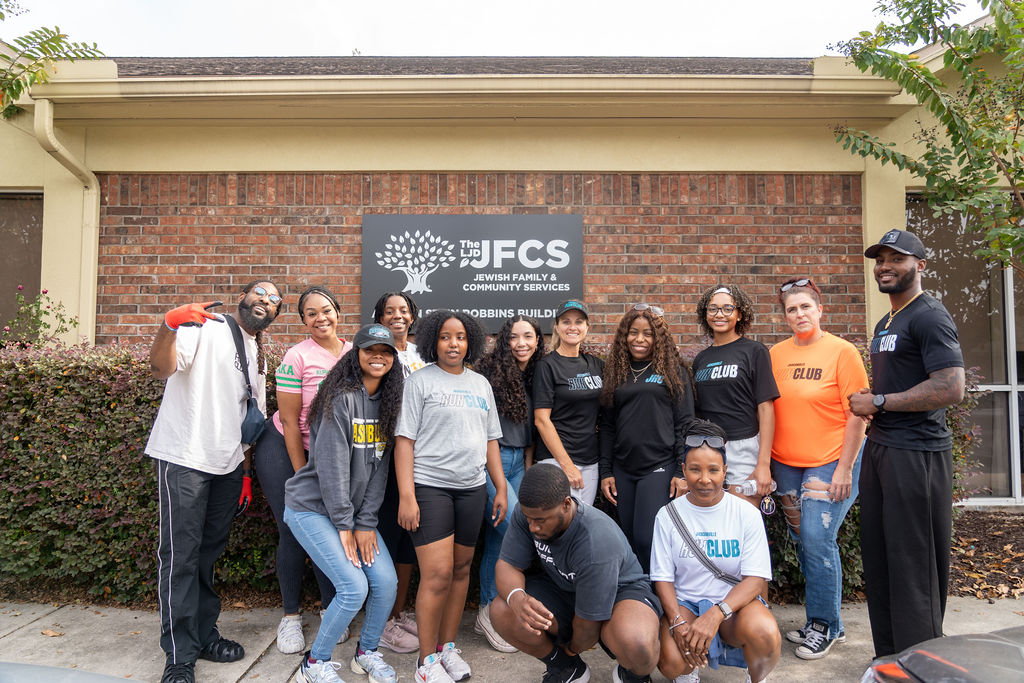
Jacksonville, Black Community Leaders, and the Politics Behind the Run
By AyeDNicole
I tried to give the Jacksonville Run Club a genuine chance.
I want to begin there because this isn’t an article written by somebody who looked at a few Instagram pictures, made assumptions and decided she didn’t like what she saw.
I showed up.
Part of my willingness to give the Jacksonville Run Club a chance came from my previous personal relationship with Rique Bentley. At one point, Rique reached out to me through TikTok regarding an opportunity connected to the club. I didn’t see the message in time because TikTok simply isn’t something I sit around checking all day.
But eventually my involvement became bigger than Rique.
I genuinely wanted to experience what everybody kept calling community.
I ran. I laughed. I interacted. I cheered for people.
Eventually I started asking myself one uncomfortable question:
Why am I running with people I don’t believe would stand up for me if standing up became inconvenient?
Running beside a Black woman is easy.
Cheering for a Black woman is easy.
But sometimes cheering on a Black woman backfires—because eventually that Black woman speaks.
And I spoke.
Rique, I Actually Saw Potential in You
Rique, despite everything, I actually believed in your potential.
I saw the camera.
I saw the connections.
I saw the sports background.
I saw somebody whom I believed could create something substantial within Jacksonville’s Black creative and professional ecosystem.
When I worked with Reesey Montana, I even brought your name up as somebody I thought could potentially contribute visual work through All One Media.
I thought about FAMU graduates, HBCU creatives, Black Greeks, artists, entrepreneurs, athletes and coaches.
I wasn’t thinking about how you could become more socially popular.
I was thinking about infrastructure.
You Already Had the Blueprint
I remembered the version of Rique connected to coaching football at Atlantic Coast High School.
That made sense to me.
Sports. Young men. Photography. Media. Coaches. Athletes. Jacksonville.
Those pieces can become an ecosystem.
Take the camera and help your homeboys who coach.
Create sports-media packages.
Document Jacksonville athletes.
Highlight Black coaches.
Tell the stories of young men who need somebody documenting them before anybody outside Jacksonville knows their names.
That’s partnership to me.
That’s networking.
That’s taking relationships and converting them into something tangible.
And when you’re also a parent, time becomes even more valuable.
I don’t live in Rique’s household, so I’m not going to pretend I can evaluate his parenting from the outside. But I believe something generally about parenthood:
Your child gets one childhood. Friends will still be outside next weekend.
Being Outside All the Time Was a Culture Shock
That leads directly into something else that genuinely surprised me about Jacksonville social culture:
How much time grown adults seemed to have to simply be outside.
I’m not talking about enjoying life.
Please go outside.
Run. Have brunch. Dance. Celebrate birthdays. Enjoy your friends.
I’m talking about when being socially present starts looking like the occupation.
That was a culture shock because FAMU trained me differently.
Florida A&M taught me that networking should eventually develop into something.
At some point, the cookout becomes the conference room.
The organization becomes the company.
The student leader becomes the professional.
The photographer develops the portfolio.
The athlete becomes the coach.
The person with connections begins connecting people to actual opportunities.
There was a time when we were younger and everybody was at somebody’s apartment, function, kickback or organization meeting.
But eventually we grow up.
We’re adults now.
That doesn’t mean stop having fun. It means socializing shouldn’t continuously substitute for professional development, parenting, ownership or purpose.
Sometimes I genuinely wondered:
When are y’all working?
When are we creating?
When are we building?
When do all these connections become partnerships?
When does “community” produce something besides another gathering?
FAMU didn’t merely teach me how to know people.
FAMU taught me to do something with what I know.
Rique and I Saw Community Differently
Our relationship also became personal.
Rique pursued me.
There were dates, seafood, oysters, story views, private family content and personal conversations.
There were behaviors that, from my perspective at the time, suggested he imagined something beyond a casual association.
So when he later tried to reduce me by saying I didn’t have a team or suggesting he was never concerned about what I was doing, I noticed the contradiction.
People who aren’t paying attention usually don’t spend that much time paying attention.
But intimacy also showed me that we had fundamentally different perspectives.
I increasingly felt that Rique was comfortable with a generalized concept of community.
My perspective is different.
I believe Black people can participate in multicultural America while simultaneously maintaining intentional Black institutions, Black businesses, Black organizations and Black social spaces.
Those positions aren’t contradictory.
And Then Came the Paragraph
When I eventually reached out to Rique, the response I received was a long, overly dramatic paragraph.
And reading it gave me one immediate impression:
This feels written to be screenshotted.
That was my reaction.
It felt less like two adults trying to understand what happened between them and more like somebody establishing his version of events in writing.
One allegation especially bothered me: the claim that I had slept with three of his homeboys.
For the record, according to my own relationship history, that’s false.
There was one man I had been involved with who had been cool with Rique when they were younger.
One.
Not three.
That man had also told me that he and Rique were no longer close like that, and I did not observe him functioning as part of Rique’s present-day inner circle.
More importantly:
I was single.
That matters.
Single Women Still Have Agency
Women need to understand this because sometimes a man will communicate that he doesn’t want a committed relationship with you and later behave as though your decisions as a single woman somehow constituted a betrayal.
You cannot have it both ways.
You cannot essentially say:
I don’t really fuck with you like that.
Then later turn around with:
But you slept with somebody I knew.
Sir, which one is it?
If you didn’t choose the relationship, you don’t retroactively acquire relationship privileges.
A man declining to commit to you does not place you into romantic storage until he decides whether he wants to come back.
If you’re single, you’re single.
That doesn’t mean abandon discernment or disregard sexual health.
It means your body and romantic decisions remain yours.
A man doesn’t get to reject commitment while simultaneously expecting exclusivity.
The One Man Rique Was Referring To
What made the situation more complicated was that the man I actually had been involved with had his own reaction to my participation in the Run Club.
He questioned why I was going.
He expressed that he didn’t want me around that environment.
And my attitude was essentially:
You don’t even go. You’re telling me you and Rique aren’t close anymore. I’m going to run.
I wasn’t attending for Rique.
I was attending because I wanted to run.
In retrospect, I’ve wondered whether that man’s discomfort came from knowing dynamics I didn’t understand yet.
That’s a question—not something I can establish as fact.
But there was one thing he did differently from Rique that I can acknowledge:
He eventually told me directly that we weren’t going to work romantically.
That hurt, but at least it was a conversation.
He recognized that he wasn’t ready for the relationship I wanted and ended it.
That’s different from leaving somebody in ambiguity and later behaving possessively about what she did while single.
Sexual Health Is Why You Keep Your Own Records
There was also a difficult sexual-health conversation within that previous relationship.
I’m not publishing another person’s private medical information or diagnosing anybody.
I can speak for myself.
I maintained my medical care and records, including documentation available to me through Baptist Health MyChart.
That experience taught me:
Know your own health information.
Get tested appropriately.
Keep your records.
Communicate directly.
Don’t allow fear, embarrassment or somebody else’s accusation to substitute for medical facts.
And don’t allow sexual-health stigma to become a weapon used to shame you.
Those conversations belong among the adults involved and qualified healthcare professionals—not gossip networks.
Don’t Let a Man Rewrite Your Singleness
That’s ultimately why Rique’s allegation bothered me.
It wasn’t simply about getting a number wrong.
It represented a contradiction women encounter constantly:
A man doesn’t want to commit.
A woman accepts that reality.
She continues living her life.
Then suddenly the fact that she continued living becomes evidence against her.
No.
You cannot leave the seat empty and become angry because somebody else eventually sat down.
And you cannot use sex to reduce a woman’s entire identity afterward.
I was building before the Jacksonville Run Club.
I had a fitness story before the Jacksonville Run Club.
Women from Jacksonville supported my fitness work before I ever needed a running organization to validate it.
The Run Club did not create me.
Rique did not create me.
A relationship did not create me.
And sex certainly does not define me.
Masculinity Doesn’t Get a Different Moral Standard
A Black woman can be scrutinized for whom she dated, whom she slept with, what she posted, how loudly she spoke and whether she was sufficiently agreeable.
Meanwhile, men can sometimes move through multiple relationships and social circles while receiving considerably less moral scrutiny.
I reject that double standard.
If we’re discussing character, discuss everybody’s character.
If we’re discussing sexual responsibility, apply it to everybody.
If we’re discussing parenting, apply it to mothers and fathers.
If we’re discussing professionalism, apply it to women and men.
And if we’re discussing Christianity, the standard can’t suddenly change depending upon whose behavior everybody likes.
You Don’t Need Somebody Else’s Mansion
Rique, a Black creative doesn’t need somebody else’s mansion, connections or approval to prove he has value.
Pick up the camera.
Create.
Direct.
Document Jacksonville.
Document Black Jacksonville.
Document HBCUs.
Document fathers.
Document Black businesses.
Document athletes.
Document coaches.
Document Black runners.
Build something.
Ownership will always impress me more than proximity.
I once thought I could help bring something out of you that I believed you doubted in yourself.
But that’s not my assignment.
A grown man has to determine what kind of man he wants to become.
A creative has to determine what his work represents.
A father has to determine how he spends his time.
And a Black person has to determine what Blackness means within his own life.
I cannot determine those things for somebody else.
It’s Not All White People—and I Want to Be Fair About That
Before somebody intentionally misunderstands this article, I want to make this unmistakable:
It’s not all white people.
I don’t believe that.
My criticism is directed toward people who carry prejudices learned in environments where somebody else’s culture, success or presence is treated as a threat.
Being pro-Black does not require me to become anti-white.
What I reject is racism.
What I reject is cultural erasure.
What I reject is somebody believing coexistence requires Black people to stop identifying ourselves as Black.
There are white Americans who genuinely understand that America’s diversity doesn’t require everybody to become culturally identical.
Integration does not require assimilation.
Coexistence does not require cultural erasure.
And because I’m willing to discuss the white people whose behavior made me uncomfortable, I also need to acknowledge the ones whose behavior did not.
That’s fairness.
Jaiden Ashley Is Exactly Why I Make That Distinction
There is one white woman from Jacksonville whom I specifically want to recognize:
Jaiden Ashley.
I’ve consistently experienced Jaiden as somebody of great character.
She supported me.
She supported my brand.
She was around during its early development while I was intentionally figuring out what needed to happen to push it forward.
What mattered wasn’t simply that a white woman supported a Black woman.
It was how she did it.
I never felt like a prop around Jaiden.
I never felt like her Black friend for marketing purposes.
I never felt that she needed to announce how accepting she was.
She simply demonstrated character.
That’s why she remained associated with my fitness brand and the Experience the Drip campaign.
Jaiden deserves her own article because I want younger readers to understand:
Being pro-Black doesn’t mean you’re required to hate everybody who isn’t Black.
I can advocate fiercely for Black institutions, Black ownership, HBCUs, Black women, Black businesses and intentional Black spaces while simultaneously loving and respecting somebody who happens to be white.
Those ideas coexist perfectly well.
A Girls’ Girl Before Everybody Started Saying It
I’ve always loved Jaiden.
Life continued.
She married.
She has beautiful children.
She’s built new things in her own life.
None of that erases what somebody contributed during an earlier chapter of yours.
Jaiden was present when my brand was young.
She had a predominantly white female audience, and from my perspective, she never behaved as though supporting my Black-owned business threatened her relationship with that audience.
That’s allyship to me.
Not a hashtag.
Not standing beside Black people when the camera comes out.
Not learning enough Black slang to become socially comfortable around us.
Character.
Jaiden was what everybody now calls a girls’ girl before social media needed to teach people the phrase.
And she’s getting her flowers.
And I’ll Give Amy Her Credit Too
I also want to mention Amy.
I don’t know Amy like that.
So I’m not going to write an entire character reference for somebody I only know from a distance.
But from what Amy has shown me—particularly through service—she seems decent.
She does.
Sometimes you don’t have to be somebody’s best friend to recognize behavior you respect.
I can observe somebody from a distance and say:
You know what? I like how she carries herself.
That’s where Amy currently sits with me.
And if this article is going to discuss discernment, then discernment has to work in both directions.
I can’t scrutinize behavior I dislike and conveniently ignore behavior I appreciate.
Amy, from what I’ve personally seen, you’re cool with me.
And Miss T? I See You Too
Then there’s Miss T—the beautiful lady with the reddish hair.
I love her energy.
What stands out to me is the independence I perceive in her journey.
She seems capable of participating without allowing participation to become her entire identity.
She has her own presence.
Her own balance.
Her own journey.
You can participate in community without disappearing into community.
You can run with everybody and still remain an individual.
You can support people without becoming socially dependent upon them.
You can have your own life, your own goals and your own identity.
That’s an energy I respect.
The Kind of Woman I Could See Representing Slaynetik Fitness
That’s also why I’m considering Miss T as somebody I may eventually approach about becoming a potential ambassador for Slaynetik Fitness.
Nothing has been formally offered or agreed upon. I’m simply recognizing publicly what I see.
For me, a brand ambassador shouldn’t simply be somebody who looks good wearing a product.
She should embody something:
Independence.
Discipline.
Movement.
Balance.
Confidence.
Authenticity.
A woman living her own life instead of performing somebody else’s definition of what womanhood should look like.
From what I’ve observed, Miss T carries some of that spirit.
And in that respect, she reminds me of what Jaiden Ashley has represented to me.
Not because every white woman I work with needs to become another Jaiden.
Absolutely not.
Everybody should remain herself.
What I’m talking about is the standard of character.
Support without performance.
Individuality without arrogance.
Community without assimilation.
Friendliness without needing ownership of somebody else.
And an ability to support Black women without requiring Black women to become culturally smaller first.
Church and Service Are Not a Gimmick
Something else I learned from this experience is that church and community service should never become marketing gimmicks.
There is a difference between inviting somebody to church because your faith genuinely means something to you and treating every new person you meet like a potential conversion statistic, networking connection or addition to your social circle.
If we’re running, sometimes I simply want to run.
I shouldn’t have to join your church to feel fully welcomed.
I shouldn’t have to adopt your religious social circle.
And somebody respectfully saying, “I don’t attend Celebration,” or any other church, shouldn’t suddenly change the warmth they receive from people who previously embraced them.
That isn’t how Christianity should work.
Faith should be demonstrated through character, service, compassion and consistency—not salesmanship.
The same applies to community service.
Don’t serve because somebody has a camera.
Don’t serve because you need content.
Don’t serve because you want another organization attached to your name.
Don’t serve because philanthropy photographs well.
Serve because somebody needs help.
Who comes when there’s no glamorous picture?
Who helps when the event isn’t trendy?
Who still cares when there isn’t an Instagram recap?
That’s where I start paying attention.
And this is another reason I mentioned Amy positively. I don’t know Amy closely enough to pretend we’re best friends, but from a distance, I have observed qualities through service that I respect.
The same principle explains my respect for Jaiden Ashley.
Jaiden never needed to sell me an image of herself.
Her conduct toward me spoke.
That’s the kind of Christianity and community spirit I understand:
Don’t advertise goodness so loudly that the advertisement becomes louder than the good.
I’ve Been Serving Longer Than I’ve Been Explaining Service Online
And here’s another reason this culture has been such a culture shock for me.
I have been a member of Alpha Kappa Alpha Sorority, Incorporated® for more than a decade.
Service is not something social media recently introduced me to.
I was introduced to organized service, sisterhood, scholarship and community responsibility years ago.
That doesn’t make me better than somebody who discovered service later.
It simply means I don’t need to perform service constantly to prove that I understand it.
I don’t have to be at every event.
I don’t have to put on organizational colors every weekend.
I don’t have to photograph every act of kindness.
I don’t have to exhaust myself trying to demonstrate publicly that I care about people.
And I certainly don’t need a Run Club to introduce me to the concept of giving back.
That’s why watching adults turn service, God and “community” into social identities has been such a culture shock for me.
Service should become organic after a while.
God should become organic.
Character should become organic.
You shouldn’t have to announce all three every five minutes.
A Clean Heart Matters More to Me Than a Clean Image
I entered Alpha Kappa Alpha with what I believed was a clean heart.
I intend to remain a member with a clean heart.
And when I eventually enter law school, I want to enter that institution with the same intention:
to learn so that I can genuinely serve—not learn how to weaponize knowledge against people.
Especially not against Black women.
I don’t want young Black women reading my work and receiving some sanitized version of my life because I became afraid of what somebody might think.
If I’m telling women to advocate for themselves, I have to explain why I learned to advocate for myself.
If I’m discussing discernment, I have to acknowledge experiences that sharpened mine.
If I’m discussing faith, I have to acknowledge moments when mine was challenged.
If I’m discussing womanhood, I cannot remove every uncomfortable part of being a woman simply because the polished version photographs better.
Relatability requires some truth.
That doesn’t mean every suspicion becomes a fact.
It doesn’t mean every private detail belongs online.
It means I refuse to manufacture perfection.
My Writing Shows Me the Foundation Never Changed
That’s also something I’ve noticed while developing the Religion & Spirituality section of my WordPress platform.
When I look across different pieces I’ve written, I can see recurring principles.
The wording changes.
The circumstances change.
The subject changes.
Sometimes I use AI assistance to help organize the structure of what I have already said.
But structure isn’t conviction.
A tool can help organize paragraphs.
It cannot manufacture the life experiences behind them.
And when I look across my writing, I continue seeing the same foundation:
Faith.
Accountability.
Discernment.
Service.
Education.
Black womanhood.
Personal responsibility.
And the belief that God should be reflected in what we do, not simply how frequently we mention Him.
That’s how I know what I’m building has a foundation.
We’ll get deeper into that part next.
Then Some Interactions Feel Completely Different
That’s precisely why I don’t lump every white woman together.
My interaction with Emily Perry, for example, left a different impression.
I remember seeing Emily at a pickleball event.
When she entered, I perceived an expectation that I should acknowledge her.
I looked at her and continued the conversation I was already having—with a little eight-year-old white girl who was excited to talk to me.
The little girl was adorable.
Her father was sweet.
That moment illustrates my entire argument.
If my problem were simply white people, why would I be happily talking to a white child and having a perfectly pleasant interaction with her father?
Because whiteness isn’t the issue.
Behavior is.
Character is.
How you treat people is.
My personal impression of Emily has been different from my experience with Jaiden, Amy and Miss T.
I’ve perceived aspects of the broader social and religious environment around the Run Club as performative.
That’s my interpretation.
I cannot read another person’s heart.
God can handle that department.
But I can determine whom I trust.
And I trust demonstrated character much more than presentation.
That’s the Standard—not Somebody’s Race
Jaiden gets her flowers.
Amy gets acknowledgment for what I’ve personally observed.
Miss T gets recognition for an energy that has made me consider whether there could eventually be a place for her within Slaynetik Fitness.
And yes, there are other people whose behavior I simply don’t care for.
That’s life.
But those differences prove my larger point:
Race alone isn’t my character test.
Character is.
I want Black spaces.
I support Black ownership.
I will unapologetically advocate for Black women.
And I can simultaneously recognize a white woman who shows me genuine character.
That’s not contradicting being pro-Black.
That’s having enough confidence in my Blackness that I don’t need hatred to prove it.
Christin Reminded Me of Myself
Now let’s return to the Run Club itself.
One reason I continued finding joy in showing up was another young Black woman:
Christin Johnson.
I called her my sista.
Christin reminded me of myself—fun, loud, funny and just a cool-ass girl.
Sometimes another Black woman’s energy makes you comfortable enough to keep coming back.
I later noticed Christin unfollowed me after I spoke out about the run club. I get it—those yo people and you serve our country for the “community” and yes that is your right and I hope she doesn’t lose her identity with the same people stripping rique of his.
And that’s okay.
I’m not messaging a grown woman asking:
Girl, why did you unfollow me?
People are entitled to curate their social media however they want.
I also noticed she developed relationships within the Run Club environment, including connections involving Rique and members of its leadership.
Whether any of that influenced her decision isn’t mine to declare.
Only Christin knows why Christin did something.
And I don’t have beef with Chrissy.
No shade to her.
She’s a sweetie.
But her situation illustrated something bigger.
When a social organization becomes deeply interconnected, personal relationships, dating histories, friendships, church relationships, professional networking and leadership can start bleeding into one another.
Suddenly we’re not just running.
Now we have politics.
And apparently everybody feels like they run shit because they’re literally running.
LMAO.
Cheering on a Black Woman Can Backfire
People love cheering for Black women when we’re entertaining.
Cheer when she runs.
Cheer when she loses weight.
Cheer when she looks good.
Cheer when she’s funny.
Cheer when she’s dancing.
Cheer when she’s smiling in the group picture.
But sometimes cheering on a Black woman backfires because eventually that woman develops enough confidence to use her voice.
Then suddenly she’s “doing too much.”
She’s “negative.”
She’s “messy.”
Everybody wonders why she couldn’t simply move on quietly.
Because moving quietly protects everybody except the person who experienced the problem.
I said some shit that I believed needed to be said.
And I addressed an elephant in the room that I knew I wasn’t the only Black person noticing.
Other people can decide whether they want to speak publicly.
I decided I would.
One of My Favorite Memories Was Jolisa
I still have positive memories.
One involves Jolisa of Body Percepts.
I remember watching Jolisa strut in front of the club like Beyoncé with what felt like an entire sea of Black people behind her.
I smiled warmly.
I loved seeing it.
Because despite whatever disagreements Black women may have, I can still appreciate another Black woman commanding a space.
Later, I felt distance between us.
I also believed she interpreted a video I made about not needing to own a gym as being directed toward her.
It wasn’t.
I was discussing Jasmine Herbert in connection with an entirely separate situation.
That misunderstanding taught me something:
Once everybody knows everybody, people start assuming every statement is secretly about somebody within the circle.
Sometimes it isn’t.
Sometimes the shoe wasn’t even in your size.
The Mines Academy Situation Raised Questions
Another experience that contributed to my discomfort involved Mines Academy around July 2026.
Sean and I had previously reached out because we genuinely wanted to organize a First Coast kickball event.
We weren’t expecting somebody else to finance everything.
We were discussing paying expenses ourselves and creating something positive.
What frustrated me was the communication and timing.
I felt we encountered unusually tight deadlines and pressure surrounding planning. Then, around the same period I communicated with Rique, I received follow-up communication concerning Mines Academy after previously trying to move the initiative forward.
Because Rique had connections within that environment and his child attended the school, the timing caught my attention.
I retained my messages from that period.
But here’s the distinction:
Suspicious timing is not proof of coordination.
I can document when I contacted somebody.
I can document when somebody responded.
I can explain why the sequence made me uncomfortable.
I cannot transform my interpretation into somebody else’s proven intent without evidence.
The chronology itself explains why I became uncomfortable.
Running While Black Means Something Different
Running isn’t historically empty for me.
Ahmaud Arbery’s killing while jogging in Georgia became a devastating reminder that something as ordinary as running can exist within a different social reality for Black Americans.
That’s why racial diversity inside a running organization isn’t automatically the same thing as meaningful racial advocacy.
Representation is who appears in the photograph.
Advocacy is what happens after the camera leaves.
We Need Black Spaces
Moving to Tampa clarified something for me.
I experienced something different.
Black.
Beautiful.
Diverse.
And importantly, distinct communities can exist beside one another without pretending everybody’s cultural experiences must become identical.
That works for me.
And it reinforced something I believe strongly:
We, as Black people, need our own shit.
That doesn’t mean hatred.
It means ownership.
It means cultural spaces where we don’t constantly have to translate ourselves.
Black professional organizations exist for a reason.
HBCUs exist for a reason.
Black churches historically existed for a reason.
Black publications existed for a reason.
Black social organizations existed for a reason.
Integration should never require cultural erasure.
Jacksonville Wasn’t My Ceiling
When I lightly announced that I was moving, I heard commentary essentially suggesting:
You don’t have to move to find greatness in Jacksonville.
But that’s somebody else’s definition of greatness.
What if the jobs I need aren’t there?
What if my professional niche requires another market?
What if another city better serves my goals?
What if I simply want to leave?
My career decisions involve my livelihood, businesses, artistry, education and future legal aspirations.
I’m allowed to relocate.
I’m allowed to outgrow a city.
I’m allowed to determine that an environment no longer serves me.
That’s not running away. That’s mobility.
Why I’m Speaking Now
There was a time when I deliberately chose not to publicly address everything that upset me.
Part of that was protecting children and people who had nothing to do with disagreements between adults.
Part of it was protecting myself.
There were periods when my anger was too intense for me to communicate productively.
Healing taught me that anger doesn’t have to become retaliation.
It can become distance.
It can become boundaries.
It can become documentation.
It can become writing.
It can become education.
Most importantly, it can become a decision to walk away.
And as somebody preparing herself for legal education, another principle matters:
Say what you can substantiate. Separate what you know from what you suspect.
That’s growth too.
So Why Am I Running With You?
That’s ultimately where the Jacksonville Run Club lost me.
If participation requires me to ignore what I see, silence questions, navigate interpersonal politics, decode church networks, manage misunderstandings and wonder whether the same people cheering beside me would advocate for somebody who looks like me when it actually matters—
why am I running with you?
Fitness is supposed to give me peace.
So I stopped.
And eventually my life moved forward.
In Conclusion: Please Find Peace & Go to School, Not a Run Club Sorority
My final message to anybody wrapped up in Run Club politics is actually simple:
Please find peace.
You do not have to run in a massive group to feel welcomed.
You do not have to attend every function.
You don’t have to be outside every weekend.
You don’t have to know everybody.
You don’t need constant photographs proving you have friends.
You don’t need a social organization to validate your adulthood.
Treat social groups sporadically if that’s what keeps them healthy for you.
Run sometimes.
Go home sometimes.
Spend time with your children.
Work.
Study.
Build your credit.
Develop your career.
Start the company.
Save some money.
Focus on your money. Focus on getting to a bag.
Because adulthood cannot permanently function like college orientation.
At some point, networking has to become net worth.
Community Shouldn’t Become an Identity Substitute
If somebody genuinely enjoys being outside constantly, that’s ultimately their choice.
If somebody wants every weekend occupied by another gathering, another run, another mixer, another church invitation and another group photograph—by all means.
Live your life.
But don’t confuse constant social activity with advancement.
Black adults shouldn’t become so consumed with maintaining social belonging that we forget about careers, ownership, education, parenting and financial stability.
Put some work boots underneath the community T-shirt.
That’s the balance I’m talking about.
And Again: It’s Not All White People
My criticism is not that whiteness automatically equals bad character.
It doesn’t.
Jaiden demonstrated the standard I respect.
Amy has shown me positive qualities through service from what I’ve personally observed.
Miss T has shown an independent energy that I respect enough to consider whether we might work together through Slaynetik Fitness in the future.
Being pro-Black should never mutate into indiscriminate racial hatred.
Judge individuals by demonstrated behavior.
Protect Black institutions.
Understand history.
Recognize racism when it appears.
But maintain enough discernment to recognize good character wherever you encounter it.
That’s grown-woman thinking.
And Rique, Go Build Something That Matters
Rique, I genuinely wish you the best.
And because you’ve expressed love for your son, I hope fatherhood remains bigger than any Run Club, social circle, camera, networking opportunity or disagreement with me.
Go build something your child can inherit.
Go document athletes.
Go help your coaching friends.
Go create the sports-media operation I once believed you were capable of creating.
Go home and invest in the relationships that actually matter.
You don’t need me to do any of that.
And I don’t need you.
That’s peace.
About That Mayor Conversation
There is one final point I want documented correctly.
At one point, I privately encouraged Rique in conversation about the possibility of pursuing greater civic leadership, including the idea of running for mayor.
I retract my personal encouragement.
That statement concerns my own previous words. It isn’t an instruction to Jacksonville residents about how they should evaluate any current or future candidate.
I don’t want an old private message from me presented as though it reflects my current position.
People are allowed to reconsider their own previous statements when subsequent experiences change their perspective.
I did.
If that old message ever surfaces, the context is simple:
Yes, I said it. And later, I retracted it.
Both things can be true.
Jacksonville residents can make their own judgments about anyone who ever seeks public office.
Everybody Can Run Their Own Race
So that’s where I’m leaving this.
Run Club, keep running.
Christin, run your race.
Jolisa, keep strutting.
Jaiden, your flowers are coming.
Amy, I see the service.
Miss T, keep moving independently.
Jacksonville, figure out what kind of community you actually want to become.
And Rique, genuinely, I wish you and your son well.
As for me?
I’m not looking for another social circle to convince me that I belong somewhere.
I already belong to myself.
FAMU taught me that networking should eventually become opportunity.
My career taught me that time has monetary value.
Fitness taught me discipline.
Jacksonville taught me discernment.
Tampa showed me that Black spaces and multicultural spaces can coexist without either pretending the other shouldn’t exist.
Alpha Kappa Alpha taught me that service doesn’t begin when somebody pulls out a camera.
My faith taught me that God doesn’t require a marketing campaign.
And adulthood taught me something even simpler:
You don’t have to attend everything.
Sometimes the healthiest thing you can do is go to work, get your money, mind your business, love your family, protect your peace and run your own damn race.
The Run Club did not create me.
Rique did not create me.
A relationship did not create me.
And somebody else’s interpretation of me will not define me.
My body was never somebody else’s territory. My singleness was never anybody’s waiting room. My voice was never theirs to silence. And my future was never theirs to define.
Never confuse proximity with ownership.
Never confuse assimilation with advancement.
Never confuse constantly being outside with building community.
Never confuse public service with private character.
And never assume the Black woman you dismissed wasn’t already building her own lane while everybody else was busy running in circles.
So no, I’m not running in circles anymore.
I’m running forward.
—AyeDNicole
Leave a Reply