
LIFE AFTER FAMU
THE REAL COME UP. NO MANIFESTING. PRAYER OFFLINE.
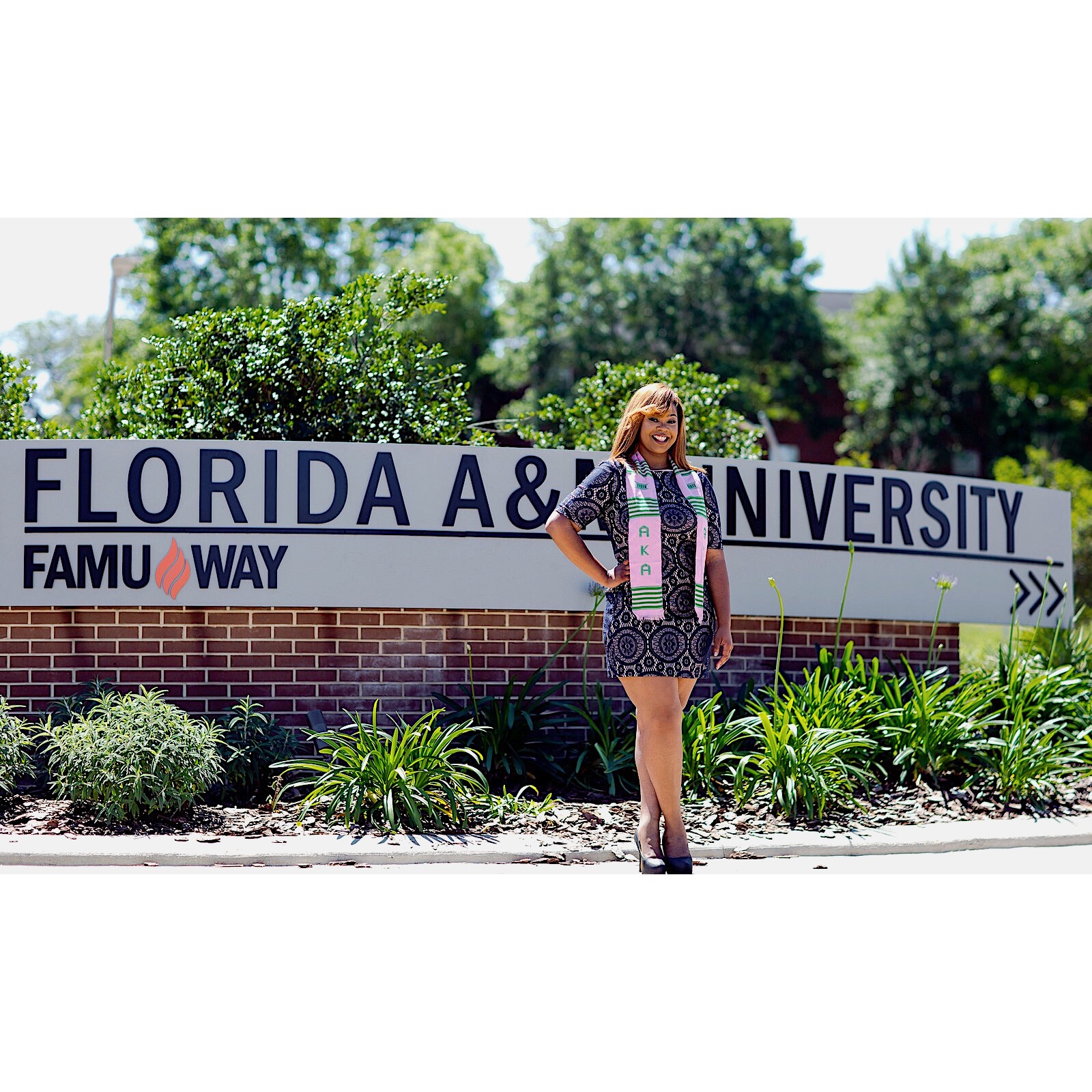
It has been approximately thirteen years since I sat down and wrote an article for WordPress.
When I think about that alone, I have to smile.
Around 2013, I was a freshman at Florida A&M University. I was young, developing, learning and entering into a completely different stage of my life. But there was something about me then that I still recognize in myself now:
My relationship with God did not need an audience in order for me to know it existed.
Religion was sacred to me.
Writing was sacred.
Emotion was sacred.
There were certain experiences that I did not immediately think needed to become content.
That distinction means even more to me in 2026.
Social media has transformed tremendously since my freshman year of college. Personal experiences become campaigns. Milestones become reels. Vulnerability becomes engagement. Spirituality can become branding. Even moments as intimate as baptism can be photographed, edited, scored with music, packaged and distributed across social media.
I understand that sharing someone’s testimony can encourage another person. I understand evangelism. I understand celebrating somebody publicly when she makes a decision about her faith.
But I also believe there is still room for something to simply be sacred.
Everything God does in your life does not have to become a marketing strategy.
I Do Not Have to Perform Being a God-Fearing Woman
Being a God-fearing woman, to me, has never simply meant being surrounded by people who say the right things.
It is spiritual.
It is knowing how I carry myself.
It is understanding that I can be positive, poised, educated and grounded without announcing every five minutes that those characteristics came from God. If they are genuinely embedded within me, eventually they should reveal themselves through how I live.
I do not need to loudly prove that I know God.
I would rather you recognize Him through my character.
That does not mean I am perfect.
I am not.
I have gone through things. I have responded emotionally. I have faced circumstances that tested me. I have encountered people and situations that made me question humanity. I have experienced fear, disappointment, conflict and moments when I had to examine myself.
Faith did not exempt me from being human.
It gave me somewhere to return.
And after thirteen years, perhaps that is one of the greatest differences between the young woman who wrote in 2013 and the woman writing today.
My vocabulary has expanded.
My education has expanded.
My experiences have expanded.
My understanding of institutions has expanded.
But the God I believe in did not suddenly appear when I became an adult.
The God Before the Résumé
This is the same God my mother and father taught me about as a baby.
The same God my mother and father prayed to concerning me and my sister.
The same God my family prayed to as life carried us from Memphis to South Carolina, Jacksonville, Tallahassee, Atlanta and through the different chapters that make our family story ours.
Before degrees.
Before careers.
Before businesses.
Before music.
Before social media branding.
Before anybody knew what I would become.
There was prayer.
That is something I cannot duplicate for somebody else, and nobody can duplicate it for me.
Our individual experiences with God cannot simply be replicated because somebody understands our vocabulary, studies our culture or imitates the aesthetics surrounding our lives.
Some things are internal.
Some things are inherited through family tradition.
Some things come from experiences nobody else was present to witness.
And some things are between you and God.
Faith Is Not a Vocabulary Competition
One thing adulthood has taught me is that people can become extremely technical about spirituality.
Every word has to be dissected. Every cultural reference has to be challenged. Every statement becomes an opportunity for somebody to demonstrate that they understand theology, psychology, history, law, race or culture better than the person speaking.
Eventually, you learn something very simple:
You do not have to argue with everybody.
Someone can look like you and still not understand you.
Someone can come from your city and still not understand your upbringing.
Someone can attend church and still not understand your relationship with God.
And someone can quote scripture fluently and still demonstrate very little integrity in the way she treats human beings.
Faith cannot merely become another technical language we weaponize against one another.
That is especially important within Black communities because our religious traditions exist alongside an enormous history involving slavery, segregation, survival, family, migration, education, politics, civil rights and community organization.
Those histories matter.
But knowing those histories does not require turning every spiritual conversation into an argument.
Sometimes wisdom is knowing when you have explained enough.
Hold your peace.
Keep living.
Why Baptism Remains Sacred to Me
I was baptized at twelve years old.
That experience belongs to an era of my life before everything became content.
Because of that, I struggle with the idea that baptism must now become a production.
Personally, I would not want my baptism transformed into an Instagram campaign. I do not need cameras capturing every angle so that a church can turn one of the most intimate declarations of my faith into promotional material.
That is my personal conviction.
Other Christians may feel differently, and some people genuinely appreciate sharing their baptism publicly as testimony.
I respect that.
But I believe Christians should also be allowed to say:
This moment is between God, my church community and me.
Privacy does not make faith less authentic.
A lack of footage does not make a testimony less powerful.
Christianity existed long before social-media engagement metrics.
When Leadership Fails, Faith Does Not Have to Fail With It
My understanding of this distinction was shaped by something I witnessed much earlier in life at my home church, Shiloh Metropolitan Baptist Church in Jacksonville.
Former Shiloh pastor Darrell Gilyard resigned in January 2008 amid allegations involving minors. He later pleaded guilty in 2009 to molesting a 15-year-old girl and sending lewd text messages to another minor and subsequently served a three-year prison sentence.
Those facts matter because this is not an example I need to exaggerate.
What happened was serious enough.
But what stayed with me was also what happened to the institution afterward.
Shiloh had to decide what kind of church it was going to be after the conduct of a leader violated the expectations attached to that leadership.
I remember a congregation having to listen.
To evaluate.
To participate.
To move forward.
On July 30, 2008, Shiloh held the congregational meeting that ultimately called H.B. Charles Jr. as its next pastor.
As a young person observing church life, that process taught me something I would understand much more deeply as an adult:
A pastor is not God.
A leader can fail without requiring me to abandon my faith.
An institution can experience scandal without requiring its congregation to surrender every principle the institution was supposed to represent.
Accountability is not inherently anti-Christian.
Sometimes accountability is precisely what stewardship requires.
Church Democracy Left an Impression on Me
The Baptist tradition I experienced taught me that congregation mattered.
People listened to prospective pastors preach. People considered leadership. Members participated. A congregation could exercise its voice rather than treating one charismatic individual as permanently synonymous with the church itself.
That fascinated me long before I had adult language for governance, due diligence, accountability and institutional controls.
Looking back, I can see how those experiences intersect with the woman I eventually became.
Education matters to me.
Governance matters to me.
Accountability matters to me.
Process matters to me.
Integrity matters to me.
Perhaps part of the reason those concepts resonate so deeply is because I encountered versions of them before I ever sat in a business classroom.
I saw them in church.
That does not mean churches always get governance right. They absolutely do not. Religious institutions are human institutions, and human institutions can protect the wrong people, mishandle money, abuse authority, ignore victims or place reputation ahead of integrity.
The misconduct of religious leaders has understandably caused some people to question churches and, for some, organized religion itself.
I understand the question.
But my answer has been to distinguish God from the behavior of people claiming to represent God.
Church Cannot Become a Gimmick
That distinction is also why I become uncomfortable when Christianity starts looking too much like influencer culture.
We already know that religious institutions are capable of financial misconduct, leadership failures and abuses of trust. History has provided more than enough examples.
The answer cannot be to become even more performative.
A church having cameras does not automatically make the church performative.
A pastor having social media does not automatically make the pastor dishonest.
A Christian having a platform does not automatically mean she is exploiting God.
The question is deeper:
What is the purpose behind what we are doing?
Are we ministering or marketing?
Are we documenting a testimony or manufacturing an image?
Are we serving people or using people to build a platform?
And when nobody is recording, are we still the Christians we present ourselves to be?
Those are questions I believe every generation has to ask.
My Southern Baptist Exposure Was Bigger Than One Florida Zip Code
My understanding of church did not begin and end in Jacksonville.
My family’s roots exposed me to Southern Christian traditions through Memphis, Tennessee, South Carolina and eventually Florida.
My mother even tried a predominantly white church after our family came to Jacksonville and quickly recognized that it was not where she believed our family belonged spiritually. We eventually found our home at Shiloh.
Those experiences mattered because they taught me early that churches can operate differently even while professing belief in the same God.
Different congregations have different cultures.
Different regions have different traditions.
Different families understand worship differently.
And because I have experienced Christianity outside of one Jacksonville environment, I do not automatically accept someone’s local interpretation of Christianity as the definitive expression of Christianity itself.
That distinction has become increasingly important to me.
I have witnessed situations in which churches made leadership decisions I personally disagreed with. I have watched congregations tolerate conduct that, based on the church governance I grew up observing, I would have expected to prompt stronger accountability.
Those experiences reinforced rather than erased one of my earliest lessons:
Never confuse loyalty to a personality with loyalty to God.
Religion, Race, Culture and Psychology Cannot Become Weapons
There is another reason I believe spiritual grounding matters.
Religion becomes dangerous when people learn enough religious language to manipulate somebody else’s conscience.
Race can be manipulated.
Culture can be manipulated.
Psychological language can be manipulated.
Legal terminology can be manipulated.
Even scripture can be manipulated.
That is why knowing yourself matters.
If you do not understand the foundation underneath you, somebody can continuously redefine you according to whichever terminology gives her the most power in a particular moment.
I can acknowledge my history as a Black woman.
I can respect the historical importance of the Black church.
I can understand African American cultural traditions.
I can study psychology.
I can pursue education.
I can appreciate creativity.
I can understand law and governance.
None of those things require me to surrender the personal relationship I have developed with God.
They can coexist without one being manipulated to invalidate another.
Turning the Cheek
There is another part of Christianity that I understand differently at 31 than I did when I was twelve years old getting baptized:
Turning the other cheek does not mean losing your voice.
For a long time, I associated turning the cheek with silence.
Keep moving.
Don’t respond.
Let people talk.
Let God handle it.
Heal privately.
Continue accomplishing what you came here to accomplish.
There is wisdom in that approach, but adulthood has taught me that silence and forgiveness are not synonymous.
Sometimes you turn the cheek because you genuinely are not ready to talk about what happened yet.
Sometimes you are still hurt.
Sometimes you are confused.
Sometimes you know that if you speak while you are angry, your anger will become louder than the lesson.
So you live.
You heal.
You mature.
You educate yourself.
You build.
You pray.
Then one day you realize that you can finally articulate an experience without allowing the experience to control you.
That is where I am now.
When I Am Ready to Say Their Names
There are women connected to different periods of my life whose actions I experienced as hurtful, malicious, humiliating or undermining.
Time passing does not erase those experiences.
Time can simply change the language I have available to discuss them.
That includes experiences involving Tia Coleman, someone whose work has also appeared in FAMU-related spaces; Alexis Ethridge and what I experienced as damaging statements about me among my sorority sisters; and Cierra Juanita Thomas, whose conduct I interpreted as contributing to an environment where another Black woman’s mental health could become something to bash, joke about or socially diminish.
I can say their names today without saying that these women define my life.
There is a difference.
I am also not saying that my interpretation is the only interpretation these women could have of what happened.
I am documenting mine.
When Black women talk about “mean-girl culture,” we sometimes make it so abstract that nobody has to confront what it actually feels like.
It can be social exclusion.
It can be gossip.
It can be humiliation disguised as a joke.
It can be somebody knowing that you are struggling and deciding that your vulnerability makes better social currency than an opportunity to show compassion.
It can be deciding who deserves access, who deserves support and who deserves to be publicly embraced based upon popularity rather than principle.
And when mental health enters that equation, it becomes even uglier to me.
A Black woman’s difficult period should not become entertainment for another Black woman.
And Then There Is Melanie
I want to be particularly clear because I am speaking about Melanie Mitchell—not her sisters.
My issue is with Melanie and my experience with Melanie.
College was college.
We were young.
There was a man Melanie and I mutually knew, and at that stage of my life, he and I understood what our relationship was.
We were friends with benefits.
There was no imaginary house, husband, wife and white picket fence attached to it.
He was on his shit.
I was on mine.
We were young adults living our lives.
What bothered me was experiencing what I perceived as the deterioration of a friendship and unnecessary rivalry surrounding a man when, from my perspective, there never needed to be a competition in the first place.
Girl, please.
That is precisely the type of situation adulthood eventually makes you look back on and say:
All of that…for what?
And yes, those experiences eventually influenced my creativity.
Jokes on Coons became one way for me to take the social dynamics I had witnessed—the jokes, popularity contests, respectability politics, selective solidarity and interpersonal mess—and put them somewhere productive.
Art.
That is another way I turn the cheek.
I create.
Popularity Is Not Community
My feelings became even more complicated as I watched Melanie develop her own podcast and professional opportunities after our FAMU years.
From my perspective, there is an irony in building platforms around experiences, community and overcoming your own mess while still leaving certain people from your actual journey feeling as though support, acknowledgment and opportunity are selectively distributed.
When somebody gains access, visibility or a stamp, I believe the real test is what she does with it.
Who gets remembered?
Who gets encouraged?
Who gets introduced?
Who gets an opportunity?
And who suddenly becomes invisible because she does not fit the version of the journey that looks best publicly?
Especially at an HBCU, giving back should mean more than returning once you become successful enough to be celebrated.
Some of the people with talent were standing beside you before the bigger platforms knew your name.
Some of us saw you before Issa Rae ever stamped you, boo.
That does not mean anybody owes me her career, contacts or accomplishments.
She does not.
It means I am allowed to examine what community means to me and decide that popularity, proximity and selective access are not synonymous with sisterhood.
Jasmine Herbert: When Kindness Starts Suffocating You
And then there is Jasmine Herbert.
The lesson I took from my experiences involving Jasmine is uncomfortable to say aloud because humility is often misunderstood as requiring a woman to diminish what she knows about herself.
Humbly speaking, I know I was better than the level of behavior I experienced.
Not better because of money.
Not because of education.
Not because of appearance, complexion, popularity or who knows whom.
I mean better than going low simply because somebody else went low.
Better than allowing insecurity to determine how I treat another Black woman.
Better than needing another woman’s humiliation in order to feel secure within myself.
That distinction matters.
There comes a point when constantly extending grace can begin to suffocate the very woman extending it.
You keep trying to be kind to the Black-woman community.
You keep turning the cheek.
You keep thinking, We are Black women; surely we understand what the world already does to us.
Then you discover that shared Blackness does not automatically produce shared values.
Some of Us Were Raised With Different Roots
That realization can be especially painful for Black women raised in Southern homes where manners
Leave a Reply