

Before getting into this conversation, let me establish something: we are not here to debate The Lord.
As a God-fearing heterosexual woman who also happens to be in the rap industry, I understand that faith, culture, music, sexuality, femininity, adulthood, and professionalism can occupy the same world without every interaction becoming a theological war.
This article is not written to bash Victoria Woods, professionally known as BroRilla, or reduce her humanity to her sexuality. Actually, it is the opposite. What caught my attention was what I interpreted as maturity underneath part of her message: an adult can understand that their adult life does not have to become the subject of every interaction they have with a child.
Children learn through observation, conversation, modeling, and the behavior adults demonstrate around them. But merely encountering an LGBTQ+ person does not cause a child to adopt that person’s sexual orientation. What children absolutely can learn from adults is how people behave, how boundaries work, how differences are handled, and how we treat people who aren’t exactly like us.
That’s where this conversation begins.
“I’m Grown” Is an Important Part of What Victoria Said
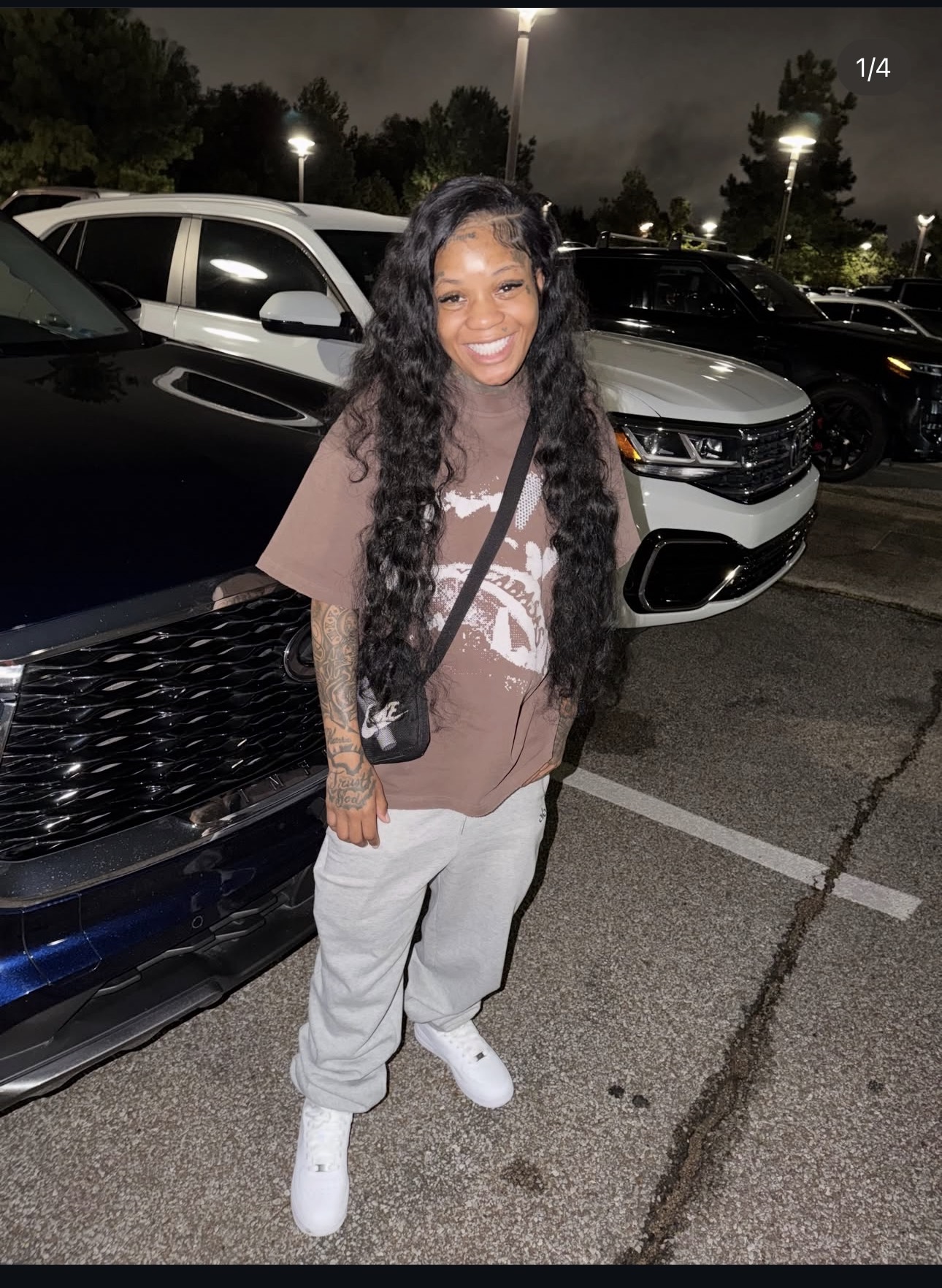
One part of Victoria Woods’ message that stood out to me was her emphasis on being grown.
I interpreted that as an adult recognizing: Whatever decisions I make concerning my adult relationships and sexuality belong to me. Children are different.
I understand that boundary.
Adults have grown-folk decisions, grown-folk relationships, and grown-folk conversations. Children don’t have to become participants in all of them.
At the same time, children should be taught that encountering somebody different from them isn’t an invitation to ridicule that person.
That’s where maturity has to work in both directions.
My Household Will Have Boundaries
As a heterosexual woman, I have the right to establish expectations for my future household according to my Christian beliefs.
My children will know what their mother believes about relationships, sexuality, and faith.
But they’ll know something else too:
You do not bully people.
You don’t call somebody a slur. You don’t harass somebody because they’re feminine. You don’t disrespect somebody because they’re masculine. You don’t make another child miserable because their family looks different from yours. And you don’t torment somebody because you don’t understand how they identify.
Having religious convictions doesn’t give anybody permission to abandon basic humanity.
Baby, That Ain’t Your Business
If you don’t want somebody within your closest personal circle because your beliefs or lifestyles aren’t compatible, you’re entitled to determine your own relationships.
But choosing your relationships is different from deliberately humiliating another human being.
You can speak.
You can say hello.
You can hold the door.
You can work together.
You can be classmates.
You can treat somebody with ordinary courtesy.
You don’t have to participate in relationships, conversations, events, or beliefs that conflict with what you’ve reserved for yourself and your household.
Likewise, somebody who isn’t LGBTQ+ doesn’t have to become LGBTQ+, change their religion, or restructure their household simply because LGBTQ+ people exist around them.
Respect doesn’t require participation.
And disagreement doesn’t require disrespect.
What I Would Teach My Children
My children don’t need to see sexual acts.
That boundary applies to everybody.
Gay or straight.
If my child encounters a feminine man, masculine woman, or anybody else who presents differently from what they’ve traditionally seen at home, my child doesn’t need to stare, whisper, point, laugh, or become the identity police.
Baby, that ain’t your business.
Let grown folks handle grown-folk conversations.
Or, as I would say:
Call the Reverend.
Because that’s how unnecessary arguments start. Everybody gets upset trying to prove religion, politics, biology, law, or whatever else, and suddenly we’ve forgotten the easiest lesson we could have taught the child:
Respect people.
Know Your Room: Protect Children
There is another layer to this conversation that deserves absolute seriousness: what happens when an adult introduces sexual conduct, explicit sexual communication, grooming behavior, coercion, or pressure into a relationship with a minor.
That is no longer merely a conversation about identity.
That is a conversation about conduct.
Adults carry the responsibility for maintaining appropriate boundaries with children and teenagers, especially when the adult is a teacher, mentor, coach, supervisor, counselor, community leader, or other authority figure.
A young person’s curiosity does not create permission for an adult to exploit it.
Sexual messages, sexual touching, sexual propositions, coercion, grooming behavior, or abusing a position of authority with a minor should be treated seriously regardless of whether the adult involved is heterosexual, homosexual, bisexual, male, female, religious, famous, popular, or connected.
Protecting children has no sexual orientation.
The Jacksonville Case: Read the Reporting for Yourself
This is why the Jacksonville case involving Victor Chrispin raises a separate safeguarding conversation.
There has been public reporting concerning criminal allegations involving a minor. Allegations and charges require legal precision and due process, so I’m not going to turn an opinion article into a courtroom or declare somebody guilty based on headlines.
The reporting is available. Read it for yourself.
Then call the Reverend.
But the broader question matters regardless of the eventual outcome of any individual case:
How should adults respond when serious allegations involving children arise around somebody they know, support, work alongside, or previously respected?
That question becomes particularly important for adults who work around children, operate in college environments, mentor young people, or publicly represent service and Greek-letter organizations.
A photograph doesn’t automatically establish endorsement. Timing and context matter. But once serious allegations become public, adults should think carefully about what their continued public association communicates.
No friendship, title, letters, popularity, professional affiliation, or social status should stop adults from taking child-safety allegations seriously.
Why Victoria Woods’ Lip-Gloss Moment Stood Out to Me
And that brings me back to Victoria Woods.
I cannot know from one video how another person behaves in every environment, and I’m not going to pretend social media gives me that authority.
I can discuss what I actually saw.
A little girl hands Victoria some lip gloss.
Victoria puts it on.
That’s it.
Maybe they’re relatives. Maybe that’s a friend’s daughter. Maybe they’re simply having a little makeup moment.
I don’t know.
And that’s precisely why I’m not going to manufacture some deeper story.
Lip gloss can simply be lip gloss.
Femininity can simply be femininity.
Makeup time can simply be makeup time.
A child’s ordinary interaction with an adult does not need to be transformed into a conversation about adult sexuality.
Victoria Woods, I See It
Victoria may make adult decisions that conflict with my Christian interpretation of sexuality.
That’s between Victoria, her convictions, and God.
I’m not here to play God.
What I can recognize is a woman embracing femininity while communicating a boundary between grown-folk life and children’s spaces.
Victoria—
I see it.
We see it.
I’m not using a social-media clip to certify somebody’s entire character. I’m appreciating the specific message and behavior I’m seeing.
Grown-folk decisions belong in grown-folk spaces.
Children deserve age-appropriate spaces.
If you’re around children, know your room.
If you’re mentoring teenagers, know your room.
If you’re coaching, teaching, advising, or supervising young people, know your room.
If you’re at work, know your room.
That standard applies to everybody.
Black Girl Magic: I See the Woman Behind the Conversation
Part of why Victoria Woods caught my attention is her delivery.
Victoria is articulate. She has this feminine, funny, Southern aura. She reminds me of La Chat.
She can be entertaining while still communicating a serious point.
And yes, I respect the PRE tattoo.
Per Big 5, we’ll see about Victoria getting on Paper Route in the name of Jesus.
Chuckles.
No, fr.
But underneath the jokes is something sincere.
This isn’t me speaking as a member of the LGBTQ+ community.
This is me speaking as a woman who sees another woman.
That’s where my Black girl magic enters the conversation.
I don’t have to share every aspect of another Black woman’s life to recognize something in her that I respect.
I don’t have to reduce her entire humanity to who she dates.
Give Victoria Woods Her Flowers 💐
While we’re giving flowers, give Victoria Woods hers.
One thing I genuinely appreciate about Victoria’s presentation is her willingness to let the girls see different stages of beauty.
We can see the natural face.
Then we can see the hair.
The makeup.
The lashes.
The full glam.
The complete presentation.
Gay or straight, women need that reminder.
It takes me back to the mantra I’ve incorporated into my women’s-confidence branding through Slaynetik Fitness™ and Experience The Drip™:
“My face card is not my hair card.”
Your hair can change.
Your wig can come off.
Your makeup can come off.
Your lashes can come off.
Your hairstyle can completely transform tomorrow.
And underneath all of it is still your face.
The glam can enhance you.
It doesn’t create you.
That’s why I appreciate seeing another Black woman comfortable enough to present herself in different stages of femininity rather than maintaining the illusion that women wake up camera-ready every morning.
Victoria can give natural face today and come back with hair, makeup, femininity, personality, and the entire production tomorrow.
Both women are Victoria.
And both deserve to feel beautiful.
My Face Card Is Not My Hair Card
That phrase means more to me than a cute slogan.
It’s about separating beauty from accessories.
It’s about reminding women that confidence doesn’t have to begin after the installation, lashes, foundation, contour, or somebody else’s approval.
That’s something I believe Victoria’s presentation can reinforce for girls and women watching her, regardless of their orientation.
I can appreciate another woman’s femininity without needing to become everything she is.
Sometimes another woman simply does something well, and you say so.
Period.
Femininity Doesn’t Belong to One Sexual Orientation
Femininity doesn’t belong exclusively to heterosexual women.
An LGBTQ+ woman embracing makeup, beauty, softness, fashion, or traditionally feminine interests doesn’t take femininity away from heterosexual women.
Likewise, a heterosexual woman doesn’t have to change her sexuality or religious convictions because she appreciates another woman’s femininity.
Women can give women flowers.
That’s it.
And when I connect Victoria’s beauty content with the lip-gloss moment and with her own comments about grown-folk boundaries, what I personally take from it is an awareness that different rooms call for different behavior.
I won’t use a short clip to certify everything about Victoria’s character. But I can acknowledge the ordinary, age-appropriate interaction I saw.
I also refuse to stereotype Victoria as some “weird queer girl” merely because she is LGBTQ+.
I can instead say:
Victoria, I see the maturity in the specific boundary you’re communicating.
Grown is grown.
Children are children.
Know your room.
And let a little girl enjoy her lip gloss.
People Have to Become Comfortable With Disagreement
Another boundary needs to be respected:
People are allowed to disagree with you.
LGBTQ+ individuals and allies should be able to encounter religious disagreement without every disagreement automatically being treated as hatred.
And heterosexual and religious people must accept the same standard in reverse. Somebody disagreeing with Christianity doesn’t give Christians permission to attack them.
Being visible is your right.
Living your life is your right.
Speaking about what you believe is your right.
Those freedoms belong to everybody else too.
Tolerance cannot mean, “You must agree with everything I believe.”
I can respect somebody’s humanity without adopting their worldview.
And don’t mistake disagreement for an invitation to pressure me into changing mine. Save the pre-scripted talking points for somebody interested in being pressured by them, because I am not.
But that boundary works both ways.
I don’t get to shove Christianity down somebody else’s throat either.
Respect does not require agreement, and disagreement does not automatically equal hatred.
Workplace Respect Matters Too
This conversation doesn’t stop at somebody’s front door.
Workplace respect must extend to heterosexual and LGBTQ+ employees alike.
Work ethic and organizational codes of conduct should emphasize morale, professionalism, boundaries, and respectful interaction.
Corporate America has made meaningful strides toward environments where LGBTQ+ employees can feel more comfortable existing as themselves professionally. I see value in that.
People should be able to work, contribute, collaborate, and build professional relationships without constantly wondering whether harmless aspects of themselves will make them targets.
But professionalism belongs to everybody.
You can be yourself and learn how to vibe.
Bring your personality.
Laugh.
Collaborate.
Mention your spouse or partner the same way another coworker might.
Have personality without forgetting where you are.
Your heterosexuality doesn’t need to dominate every workplace conversation.
Your homosexuality doesn’t need to dominate every workplace conversation.
Your Christianity doesn’t need to dominate every workplace conversation.
Neither does somebody else’s lack of religion.
Everybody still has a job to do.
HR Doesn’t Need Everybody to Agree
Human Resources doesn’t need employees to reach theological or philosophical agreement.
HR needs employees to follow the organization’s code of conduct.
A Christian employee and an LGBTQ+ employee can fundamentally disagree about sexuality outside the workplace and still complete a financial analysis together Monday morning.
That’s adulthood.
Nobody should use slurs.
Nobody should create an intimidating or humiliating work environment.
Nobody needs to interrogate another employee’s private life.
And professional courtesy should never be confused with personal agreement.
That’s workplace maturity.
From the Executive Desk of 4HIO Label: Building Bridges in Black Media
As the executive of 4HIO Label, I also have a professional recommendation.
I would genuinely like to see Hollywood the Doll, a Florida A&M University graduate and virtual live-show host who advocates for the LGBTQ+ community, connect creatively with Victoria Woods.
From what I’ve observed of their communication styles, Hollywood the Doll reminds me of Victoria in certain ways. Both have strong personalities, articulate themselves well, understand entertainment, and know how to hold an audience.
I think they could have an amazing live conversation.
Maybe Hollywood appears on Victoria’s platform.
Maybe Victoria appears on Hollywood’s.
Maybe they interview one another.
Maybe they discuss femininity, Black entertainment, LGBTQ+ perspectives, Southern culture, music, media, adulthood, FAMU, or simply their experiences as Black women occupying entertainment spaces.
Y’all should talk.
And let me make the executive position of 4HIO clear: I’m not recommending that connection because I’m trying to capitalize on it or monetize somebody’s identity.
Sometimes a good creative connection can simply be a good creative connection.
4HIO Should Facilitate Creativity, Not Control It
Brand management should not mean controlling what another creator produces.
My vision for 4HIO is to help make the business surrounding creativity understandable and well-rounded without stripping creators of the individuality that made them interesting in the first place.
Brand management can help creators understand business relationships, branding, intellectual property, opportunities, contracts, media strategy, and professional development.
It doesn’t need to control their personality.
If I recommend two creators work together, that doesn’t mean 4HIO needs a percentage of their conversation.
It doesn’t mean I own their collaboration.
It doesn’t mean I dictate what they say.
Sometimes leadership means seeing two people and saying:
“I think y’all would create something good together.”
Then allowing them to determine what happens next.
LGBTQ+ Black Creatives Have a Place at 4HIO
I can maintain my Christianity and heterosexuality while saying this plainly:
LGBTQ+ Black creatives are welcome at 4HIO.
Welcoming somebody doesn’t mean becoming them.
Supporting an LGBTQ+ artist doesn’t change my sexual orientation.
Working alongside an LGBTQ+ executive doesn’t change my household beliefs.
Featuring an LGBTQ+ creator doesn’t require either person to surrender their convictions.
It means we understand how to conduct business with people who aren’t exactly like us.
LGBTQ+ Black creatives, hosts, artists, stylists, producers, journalists, executives, and personalities have contributed tremendously to Black media and culture—including culture enjoyed by heterosexual Black audiences.
Our communities aren’t operating on separate planets.
We create together.
We influence one another.
We work together.
We laugh together.
We disagree.
And sometimes we still produce something incredible together.
Inclusion Without Conversion
That is the kind of inclusion I want associated with 4HIO.
Inclusion without conversion.
Nobody needs to convert me into an LGBTQ+ identity for me to recognize LGBTQ+ talent.
Likewise, nobody needs to become Christian or heterosexual to have professional value within a Black-owned creative environment that I lead.
Come into the room knowing who you are.
Then respect everybody else who’s in it.
Music.
Sports.
Creativity.
Content creation.
Media.
Business.
There should be room for different personalities throughout all of it.
You can be yourself and still know your room.
Black Media Needs Bridges, Not Cliques
I want 4HIO to reject the selective, clique-driven culture that can make talented people believe acceptance depends upon knowing the right person, belonging to the right organization, having the right letters, or fitting somebody else’s social hierarchy.
That’s not the Black creative ecosystem I want to help build.
There is enough room for the FAMU graduate, rapper, heterosexual Christian woman, LGBTQ+ host, athlete, producer, executive, journalist, stylist, entrepreneur, and content creator.
Everybody doesn’t have to become everybody else for everybody to have a seat at the creative table.
That’s why my recommendation of Hollywood the Doll and Victoria Woods comes from a simple place:
I see two personalities who I think could create an interesting conversation.
No ownership.
No forced partnership.
No attempt to monetize somebody’s identity.
Just a professional recommendation from one Black-owned creative platform recognizing possibilities within another corner of Black media.
Faith Does Not Require Disrespect
My Christian beliefs can inform what happens inside my household without requiring me to mistreat somebody else’s household.
If I believe something constitutes sin, that’s my theological position.
Respecting somebody who is LGBTQ+ doesn’t require me to abandon Christianity.
Being Christian doesn’t require that person to accept my interpretation of Christianity either.
That’s the balance I want my children to understand:
Respect people. Know your family’s values. Understand your boundaries. Don’t bully anybody. Don’t let anybody pressure you sexually. Tell a trusted adult immediately if somebody violates your body or introduces inappropriate sexual contact.
Most importantly, adults—not children—carry responsibility for maintaining appropriate adult-child boundaries.
I Can Support Victoria Woods Without Becoming Victoria Woods
When I say I support Victoria speaking, I’m saying Victoria Woods is entitled to articulate her convictions.
Other people are entitled to agree.
Other people are entitled to disagree.
And from one Black woman looking at another Black woman, I can appreciate her willingness to speak without needing to become her, imitate her, or agree with every aspect of her life.
I don’t merely see “an LGBTQ+ person.”
I see a woman.
A Southern Black woman with humor, femininity, personality, convictions, contradictions, and her own story.
Sometimes Black girl magic is simply being mature enough to say:
“Sis, we don’t live the same life. We don’t believe everything the same way. But I heard what you said, I understood the boundary you were trying to communicate, and I’m willing to give you enough humanity to actually listen.”
Spare the Kids—and Teach Them Humanity
Ultimately, this conversation is bigger than Victoria Woods.
It’s about parental authority, adulthood, religious conviction, workplace professionalism, personal boundaries, child protection, Black media, creative collaboration, femininity, and basic human respect.
Parents can establish conservative religious boundaries.
LGBTQ+ adults can live according to their own beliefs.
Children can understand that different people exist without being told they must become like them.
Children can be taught religious beliefs without being taught to bully.
Coworkers can fundamentally disagree and still behave professionally.
Black creatives with completely different lives can collaborate without anybody surrendering their identity.
And adults can maintain an uncompromising standard against the sexual exploitation of children.
Those principles can coexist.
So when I say spare the kids, I mean spare children from sexualization, exploitation, coercion, grooming, inappropriate sexual communication, hatred, slurs, bullying, and adults who refuse to maintain appropriate boundaries.
Teach children what your household believes.
Teach them what you believe God expects from you.
But also teach them that seeing somebody different isn’t an invitation to humiliate them.
Sometimes you speak.
Sometimes you say hello.
Sometimes you collaborate.
Sometimes you mind your business.
Sometimes you recognize another person’s life isn’t yours to control.
And sometimes you look across an industry, see somebody completely different from yourself, recognize her talent, femininity, personality, and voice, and simply say:
“Sis, you deserve your flowers too.”
That’s the kind of room I want 4HIO Label to represent.
A Girly-Girl Note From Me 💐
Victoria,
Keep your face card separate from your hair card. Keep your lip gloss close. Keep your grown-folk business grown, and keep showing the girls that glam is an accessory—the woman underneath it is the foundation.
We don’t have to live identical lives for one woman to recognize another woman’s light.
May your rooms stay respectful, your boundaries stay grown, your face card stay undefeated, and your lip gloss never disappear into the bottom of your purse.
Because that is a struggle that transcends every orientation, chile. 💄
Have boundaries. Have faith. Protect children. Respect your workplace. Respect people’s humanity. Build bridges in Black media.
Know your room. Respect children. Respect boundaries. Respect people. Respect the Most High.
And when everybody starts arguing and trying to make children settle grown-folk debates?
Baby—
call the Reverend.
With love,
Adrienne “AyeDNicole” Floyd
From the FAMU Rattlers who love Victoria, the Rattlers who see her, and the Black LGBTQ+ community members who love her too.
Period. 💋🐍💐
In Jesus’ name,
Amen.
Leave a Reply